
Seeing a bat indoors or noticing bats leaving a roofline can be unsettling. The right response depends on whether a single bat is in occupied space or a group is using part of the structure. Calm observation, separation from people and pets, and professional guidance are safer than hurried repairs or direct handling.
If a bat is in occupied living space
Move people and pets away from the room and close interior doors to limit the bat's movement through the home. Avoid swinging objects, chasing the bat, or attempting to pick it up. A frightened bat can move unpredictably, and physical contact creates an unnecessary risk.
If anyone was sleeping, a child or person unable to reliably report contact was present, or a pet may have interacted with the bat, seek prompt guidance from local public-health authorities or a veterinarian as appropriate. Do not release or discard the bat until those professionals explain whether it may be needed for evaluation.
- Keep visual track of the bat from a safe distance if possible.
- Close doors leading to other occupied rooms.
- Keep pets confined elsewhere in the home.
- Contact a qualified wildlife-control professional for safe removal assistance.
Recognize signs of structural use
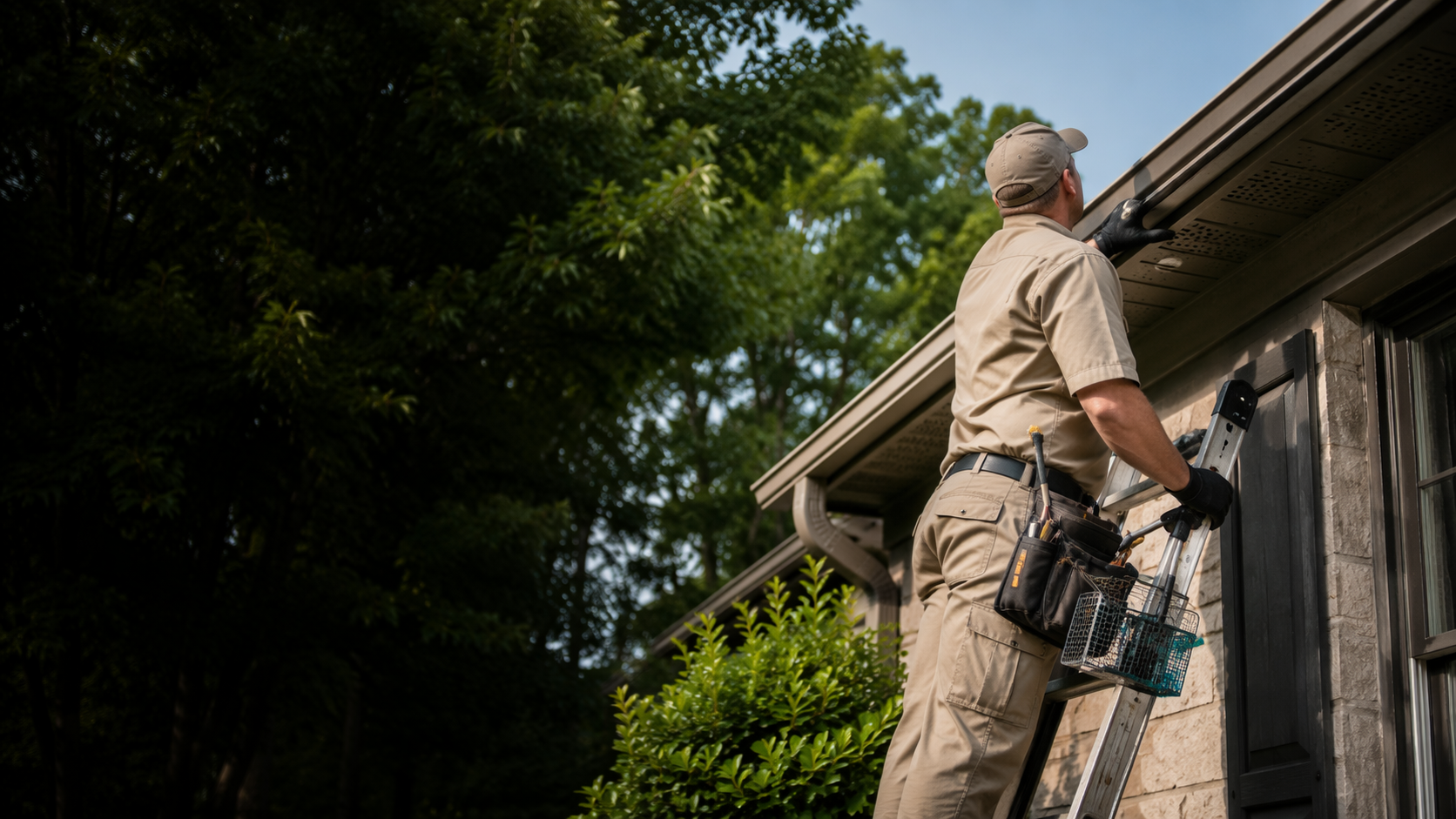
Repeated activity at dusk may indicate that bats are using an attic, wall void, chimney area, or another protected space. Watch from the ground and note the time, location, and number of animals seen entering or leaving. Do not climb onto the roof or disturb the opening to get a closer look.
Dark staining near a gap, small droppings below a roost area, faint scratching, or recurring indoor appearances can also warrant an inspection. These signs may have other causes, so species confirmation and a building assessment are important before work begins.
Why timing matters for bat exclusion
Bat work is not simply a matter of covering a hole. A structure may have several connected openings, and closing the main exit can trap animals or redirect them into occupied rooms. The presence of flightless young can also affect when exclusion can be performed responsibly and lawfully.
A professional evaluates current activity, likely roost areas, alternate openings, seasonal considerations, and the condition of the building. The plan may involve one-way devices at active exits while other suitable gaps are secured, followed by final closure after activity has ended.
Prepare for a professional inspection
Write down where and when you saw activity and whether a bat entered a living space. Mention recent roof, chimney, siding, or attic work that may have changed the building. If you can safely take photographs from the ground, they may help the operator understand the location before arrival.
Ask the operator to explain how active exits will be identified, how the structure will be checked for additional openings, and how completion will be confirmed. Also clarify whether cleanup or contaminated-material work is part of the proposal or requires a separate service.
Reduce future access after activity is resolved
Once a professional confirms the animals are out, maintain roof edges, flashing, vents, chimney protection, fascia, soffits, and utility penetrations. Because bats can use small construction gaps, repairs should be durable and compatible with ventilation and drainage needs.
Continue observing the repaired areas during the following evenings and seasons. If activity returns, contact the company according to the follow-up or warranty terms rather than reopening or changing completed work yourself.
Continue reading